Animals · Puzzle #47 · Sunday, November 15
Animals: the board
Eight items, eight categories, one place each. Here is the board with every figure and where it comes from, and the best way to place them. Play today's Animals.
The categories
- Most looked-up: 1 pt per 100,000 Wikipedia views in 2025
- Top speed: 1 pt per 5 mph
- Long wait: 1 pt per 25 days' pregnancy or incubation
- Wild in South America: 10 pts if native to South America
- Known worldwide: 1 pt per 15 Wikipedia languages
- Late bloomer: 1 pt per year to grow up
- Heavyweight: 1 pt per doubling over 1 lb
- Long life: 1 pt per 7 years
The best board
- Two-toed sloth in Long wait: its young take 350 days to be born or hatch (10.0)
- Capybara in Most looked-up: its Wikipedia article was read 2.16 million times in 2025 (10.0)
- House mouse in Known worldwide: Wikipedia has an article on it in 121 languages (8.1)
- Dromedary camel in Heavyweight: a typical adult weighs 957 lb (9.9)
- Green anaconda in Wild in South America: is native to South America (10.0)
- Blue whale in Long life: the oldest on record lived 110 years (10.0)
- Orca in Late bloomer: females can first breed at 10 years old (10.0)
- Serval in Top speed: tops out at 50 mph (10.0)
The most this board could score: 78.0 of 80.
The lineup, figure by figure
Two-toed sloth
Sloth with two claws on each front foot
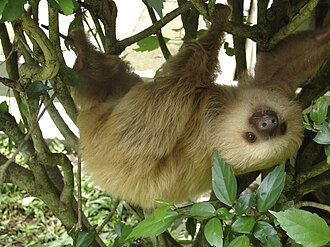
Photo: Jsfouche, CC BY-SA 3.0 On this board Two-toed sloth scored best in Long wait (10.0): its young take 350 days to be born or hatch. Top speed was its weakest fit (0.1): it tops out at 0.3 mph. The best board puts it there too.
- Most looked-up
- its Wikipedia article was read 37,284 times in 2025 (0.4) Source: Wikimedia page views
- Top speed
- tops out at 0.3 mph (0.1) Source: Wikipedia
- Long wait
- its young take 350 days to be born or hatch (10.0) Source: AnAge
- Wild in South America
- is native to South America (10.0) Source: Wikipedia
- Known worldwide
- Wikipedia has an article on it in 38 languages (2.5) Source: Wikipedia language editions (Wikidata)
- Late bloomer
- females can first breed at 2 years old (2.0) Source: Wikipedia
- Heavyweight
- a typical adult weighs 14 lb (3.8) Source: AnAge
- Long life
- the oldest on record lived 41 years (5.9) Source: AnAge
Capybara
The famously chill rodent, friends with everyone
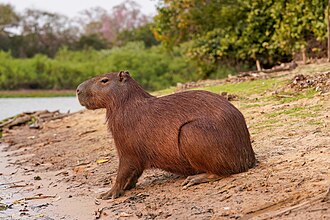
Photo: Giles Laurent, CC BY-SA 4.0 On this board Capybara scored best in Most looked-up (10.0): its Wikipedia article was read 2.16 million times in 2025. Late bloomer was its weakest fit (1.2): females can first breed at 1.2 years old. The best board puts it there too.
- Most looked-up
- its Wikipedia article was read 2.16 million times in 2025 (10.0) Source: Wikimedia page views
- Top speed
- tops out at 22 mph (4.4) Source: sydneyzoo.com
- Long wait
- its young take 150 days to be born or hatch (6.0) Source: AnAge
- Wild in South America
- is native to South America (10.0) Source: Wikipedia
- Known worldwide
- Wikipedia has an article on it in 105 languages (7.0) Source: Wikipedia language editions (Wikidata)
- Late bloomer
- females can first breed at 1.2 years old (1.2) Source: Wikipedia
- Heavyweight
- a typical adult weighs 121 lb (6.9) Source: AnAge
- Long life
- the oldest on record lived 15 years (2.2) Source: AnAge
House mouse
The mouse in the kitchen and in the lab

Photo: Unknown authorUnknown author (original) / Ilmari Karonen (editing), Public domain On this board House mouse scored best in Known worldwide (8.1): Wikipedia has an article on it in 121 languages. Wild in South America was its weakest fit (0.0): it is domesticated, with no wild range. The best board puts it there too.
- Most looked-up
- its Wikipedia article was read 244,650 times in 2025 (2.4) Source: Wikimedia page views
- Top speed
- tops out at 8 mph (1.6) Source: Wikipedia
- Long wait
- its young take 19 days to be born or hatch (0.8) Source: AnAge
- Wild in South America
- is domesticated, with no wild range (0.0) Source: Wikipedia
- Known worldwide
- Wikipedia has an article on it in 121 languages (8.1) Source: Wikipedia language editions (Wikidata)
- Late bloomer
- females can first breed at 0.1 years old (0.1) Source: Wikipedia
- Heavyweight
- a typical adult weighs 0.72 oz (0.0) Source: AnAge
- Long life
- the oldest on record lived 4 years (0.6) Source: AnAge
Dromedary camel
One-humped camel of the caravans
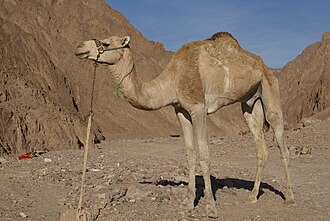
Photo: Florian Prischl, CC BY-SA 3.0 On this board Dromedary camel scored best in Long wait (10.0): its young take 405 days to be born or hatch. Wild in South America was its weakest fit (0.0): it is domesticated, with no wild range. The best board puts it in Heavyweight instead, for 9.9, and gives Long wait to Two-toed sloth (10.0).
- Most looked-up
- its Wikipedia article was read 287,548 times in 2025 (2.9) Source: Wikimedia page views
- Top speed
- tops out at 40 mph (8.0) Source: en.wikipedia.org
- Long wait
- its young take 405 days to be born or hatch (10.0) Source: AnAge
- Wild in South America
- is domesticated, with no wild range (0.0) Source: Wikipedia
- Known worldwide
- Wikipedia has an article on it in 102 languages (6.8) Source: Wikipedia language editions (Wikidata)
- Late bloomer
- females can first breed at 3 years old (3.0) Source: Wikipedia
- Heavyweight
- a typical adult weighs 957 lb (9.9) Source: AnAge
- Long life
- the oldest on record lived 28 years (4.1) Source: AnAge
Green anaconda
Constrictor that lurks in swamps and rivers
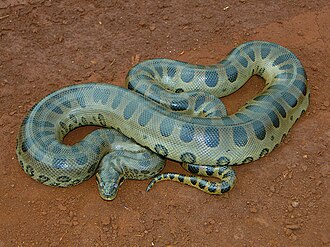
Photo: MKAMPIS, CC BY-SA 4.0 Green anaconda is native to South America, so its best fit on this board was Wild in South America, worth 10.0. Its weakest was Top speed, worth 1.0, since it tops out at 5 mph. That is where the best board puts it as well.
- Most looked-up
- its Wikipedia article was read 387,682 times in 2025 (3.9) Source: Wikimedia page views
- Top speed
- tops out at 5 mph (1.0) Source: Wikipedia
- Long wait
- its young take 195 days to be born or hatch (7.8) Source: Wikipedia
- Wild in South America
- is native to South America (10.0) Source: Wikipedia
- Known worldwide
- Wikipedia has an article on it in 67 languages (4.5) Source: Wikipedia language editions (Wikidata)
- Late bloomer
- females can first breed at 2.5 years old (2.5) Source: Wikipedia
- Heavyweight
- a typical adult weighs 215 lb (7.7) Source: AnAge
- Long life
- the oldest on record lived 32 years (4.5) Source: AnAge
Blue whale
Filter-feeder that eats tons of krill a day
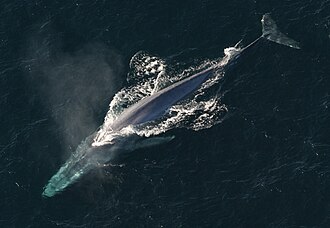
Photo: NOAA Photo Library, Public domain On this board Blue whale scored best in Long life (10.0): the oldest on record lived 110 years. Wild in South America was its weakest fit (0.0): it lives in the sea. The best board puts it there too.
- Most looked-up
- its Wikipedia article was read 922,272 times in 2025 (9.2) Source: Wikimedia page views
- Top speed
- tops out at 30 mph (6.0) Source: Wikipedia
- Long wait
- its young take 350 days to be born or hatch (10.0) Source: AnAge
- Wild in South America
- lives in the sea (0.0) Source: Wikipedia
- Known worldwide
- Wikipedia has an article on it in 111 languages (7.4) Source: Wikipedia language editions (Wikidata)
- Late bloomer
- females can first breed at 5 years old (5.0) Source: Wikipedia
- Heavyweight
- a typical adult weighs 299,829 lb (10.0) Source: AnAge
- Long life
- the oldest on record lived 110 years (10.0) Source: AnAge
Orca
The "killer whale," actually a dolphin

Photo: Robert Pittman, Public domain On this board Orca scored best in Late bloomer (10.0): females can first breed at 10 years old. Wild in South America was its weakest fit (0.0): it lives in the sea. The best board puts it there too.
- Most looked-up
- its Wikipedia article was read 1.58 million times in 2025 (10.0) Source: Wikimedia page views
- Top speed
- tops out at 35 mph (7.0) Source: Wikipedia
- Long wait
- its young take 435 days to be born or hatch (10.0) Source: AnAge
- Wild in South America
- lives in the sea (0.0) Source: Wikipedia
- Known worldwide
- Wikipedia has an article on it in 116 languages (7.7) Source: Wikipedia language editions (Wikidata)
- Late bloomer
- females can first breed at 10 years old (10.0) Source: Wikipedia
- Heavyweight
- a typical adult weighs 8,791 lb (10.0) Source: AnAge
- Long life
- the oldest on record lived 90 years (10.0) Source: AnAge
Serval
Long-legged wild cat with oversized ears
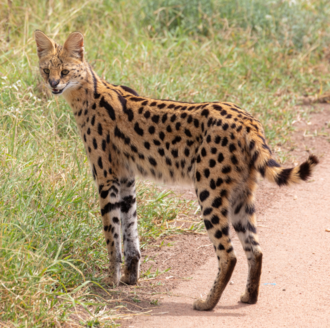
Photo: Diego Delso, CC BY-SA 4.0 On this board Serval scored best in Top speed (10.0): it tops out at 50 mph. Wild in South America was its weakest fit (0.0): it isn't native to South America. The best board puts it there too.
- Most looked-up
- its Wikipedia article was read 429,432 times in 2025 (4.3) Source: Wikimedia page views
- Top speed
- tops out at 50 mph (10.0) Source: nationalgeographic.com
- Long wait
- its young take 70 days to be born or hatch (2.8) Source: AnAge
- Wild in South America
- isn't native to South America (0.0) Source: Wikipedia
- Known worldwide
- Wikipedia has an article on it in 101 languages (6.7) Source: Wikipedia language editions (Wikidata)
- Late bloomer
- females can first breed at 2.2 years old (2.2) Source: Wikipedia
- Heavyweight
- a typical adult weighs 29 lb (4.9) Source: AnAge
- Long life
- the oldest on record lived 22 years (3.2) Source: AnAge


