Price tags · Puzzle #25 · Saturday, October 24
Price tags: the answers
Four questions, each with one true number. Here they are with their answers, how to reason each one out, and where the number comes from. Play today's Price tags.
1. A soda a day: At the US average price of a 12-ounce can of soda in August 2026 (sold in 12-packs), what would a can a day for a year cost?
The answer: about $220. Soda in 12-packs ran about 60 cents a can all year.
Napkin math - 365cans a year
- ×$0.5a can
≈$182.5
The real answer is about $220 (US Bureau of Labor Statistics). On a napkin, take 365 cans a year, times $0.5 a can, and you get about $180. The estimate is 1.2 times too low, close enough to score 9.2 out of 10. Because only the ratio counts, anything between $110 and $440 was worth 7.0 or more.
2. Planet Fitness: How much did members spend at Planet Fitness gyms, system-wide, in 2025?
- Clubs
- 2,896 at the end of 2025
- Counts
- System-wide sales at franchise and company-owned clubs
The answer: about $5.3 billion. Planet Fitness ended 2025 with about 20.8 million members.
Napkin math - 20Mmembers
- ×$15each a month
- ×12months a year
≈$3.6B
The answer comes to about $5.3 billion (Planet Fitness, Inc.). Without looking anything up, take 20 million members, times $15 each a month, times 12 months a year, and you get about $3.6 billion. The estimate is 1.5 times too low, close enough to score 8.3 out of 10. Any guess from $2.6 billion to $11 billion scores 7.0 or better, because the game only counts how many times off you are.
3. The Alaska Purchase: How much did the United States agree to pay Russia for Alaska in 1867, in the dollars of the day?

Photo: Lance Vanlewen, CC BY-SA 4.0 - Bought from
- Russia, 1867
- Negotiated by
- Secretary of State William Seward
- Russian settlers
- Never more than 400
The answer: $7.2 million. Seward agreed to the $7.2 million price on March 30, 1867, and the Senate approved the treaty on April 9.
Napkin math: Russia was eager to unload a remote, lightly settled colony, so expect a price in the single-digit millions, less than Louisiana fetched 64 years earlier.
The answer comes to $7.2 million (U.S. Department of State, Office of the Historian). With no neat arithmetic to lean on, start with the order of magnitude: this one is in the millions. Because only the ratio counts, anything between $3.6 million and $14 million was worth 7.0 or more.
Source: U.S. Department of State, Office of the Historian, Purchase of Alaska, 1867
4. A year of housing: How much did the average US household spend on housing, including rent or mortgage, utilities and furnishings, in 2024?
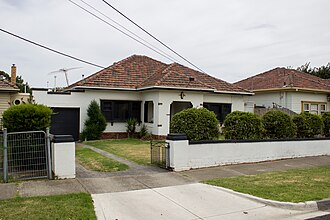
Photo: Philip Mallis, CC BY-SA 2.0 - Measured by
- BLS Consumer Expenditure Surveys
- Share of household spending
- 33.4%
The answer: about $26,266. Housing rose 3.3% in 2024, the only major category with a statistically significant increase.
Napkin math - $1,800a month for rent or mortgage, utilities and upkeep
- ×12months a year
≈$21.6k
The true figure is about $26,266 (U.S. Bureau of Labor Statistics). Without looking anything up, take $1,800 a month for rent or mortgage, utilities and upkeep, times 12 months a year, and you get about $22,000. That comes out 1.2 times too low, and a guess that far off still scores 9.2 out of 10. Because only the ratio counts, anything between $13,000 and $53,000 was worth 7.0 or more.
Source: U.S. Bureau of Labor Statistics, Consumer Expenditures--2024 (Table A, 2022, 2023 and 2024 columns)

